
Huawei FusionCharge
Megawatt Charging
15-minute-class charging, redefining the supercharging era for electric trucks
All Scenarios
Every scenario, reliable operation
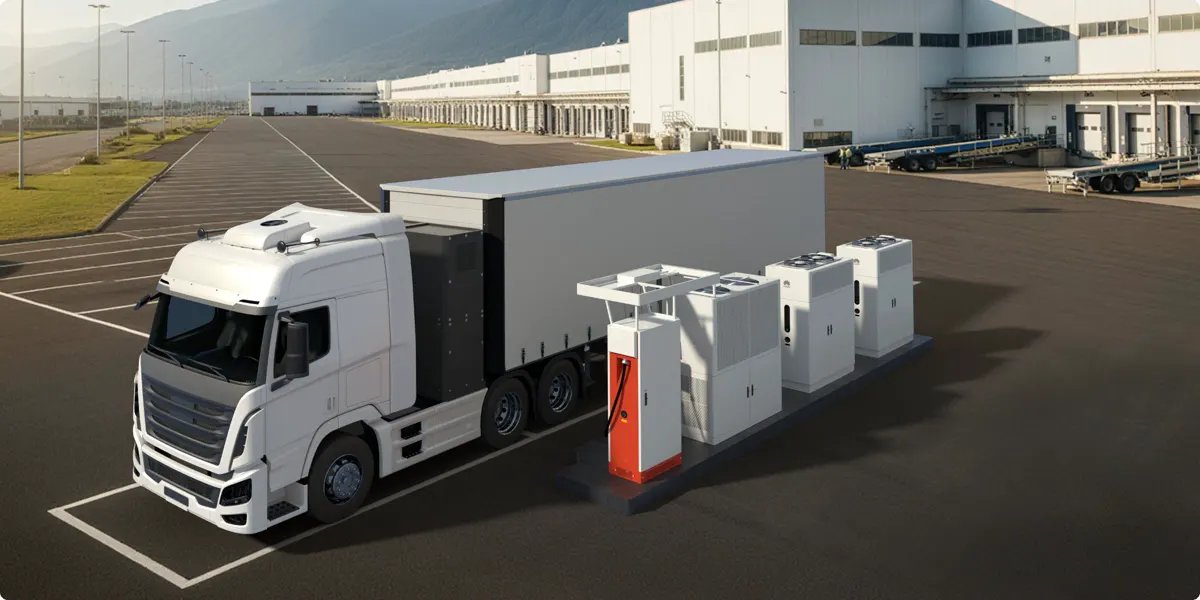
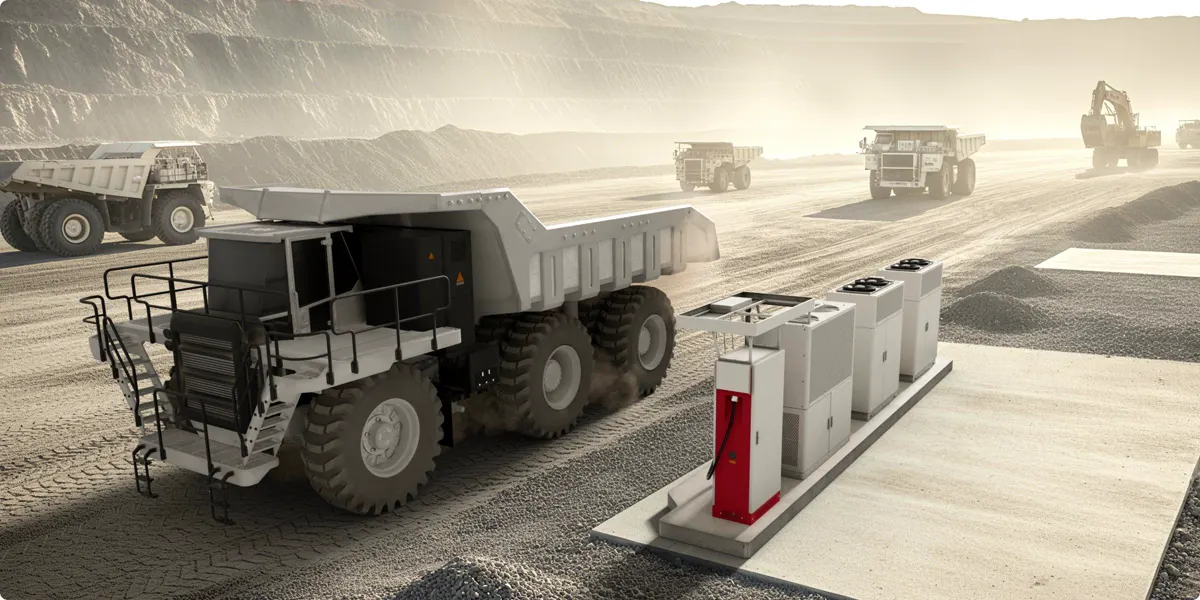
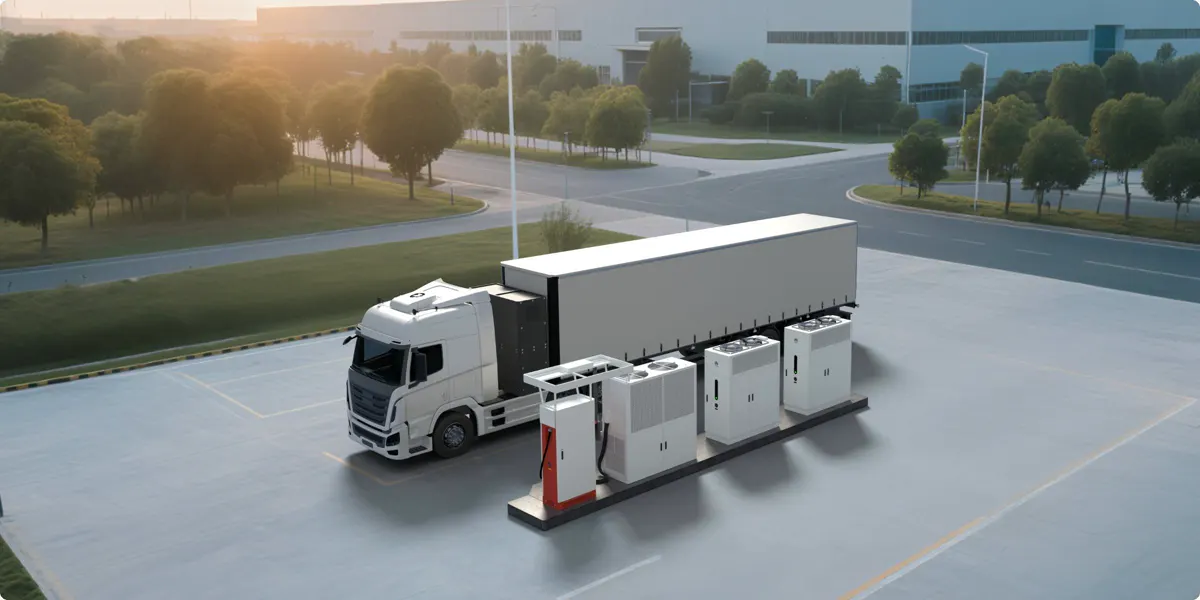
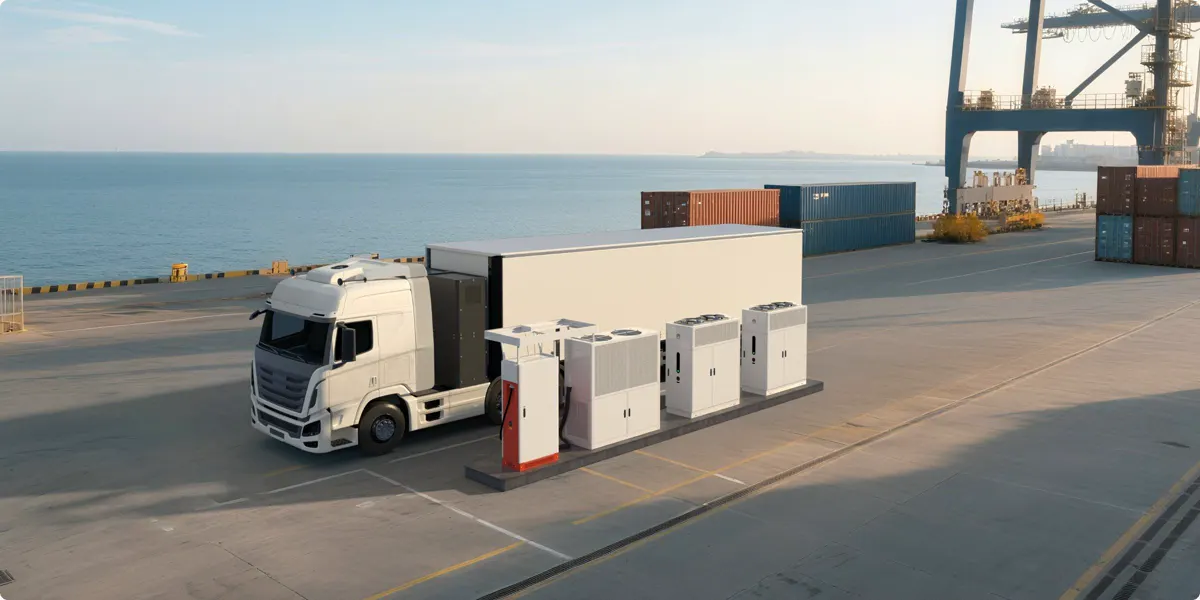
Huawei's full liquid cooling and fully sealed design keep modules 100% sealed, with zero contact with the harsh environments of heavy-truck operations — highly reliable, with low losses.

Loved by Drivers
Charge 5 minutes, drive 100 km[1]
Dual guns deliver 2400 A continuously, taking a truck from 10% to 80% in about 15 minutes.
Grid Friendly
Grid friendly
01
AI PV + ESS + charging
Harmonic-suppression algorithms minimise grid impact, while AI forecasts station load for intelligent peak shaving and load shifting.
02
Built tough
Handles extreme heat, cold, humidity, dust and salt spray — worry-free in every scenario.
03
Safer
End-to-end high-voltage protection; current-tracking technology prevents overshoot for stable output throughout the charge.
Operational Excellence
Operational excellence
01
Haul more
15% higher logistics efficiency and 2 hours of charging time saved per day on average.
02
Cheaper to build
70% less site area, cutting land, paving and cabling costs.
03
Long service life
Fully liquid-cooled with a 10-year lifecycle — 2–3× longer than typical air-cooled equipment.
04
Every vehicle type
One investment, three returns: one platform charges supercharging trucks, fast-charging trucks and passenger cars.
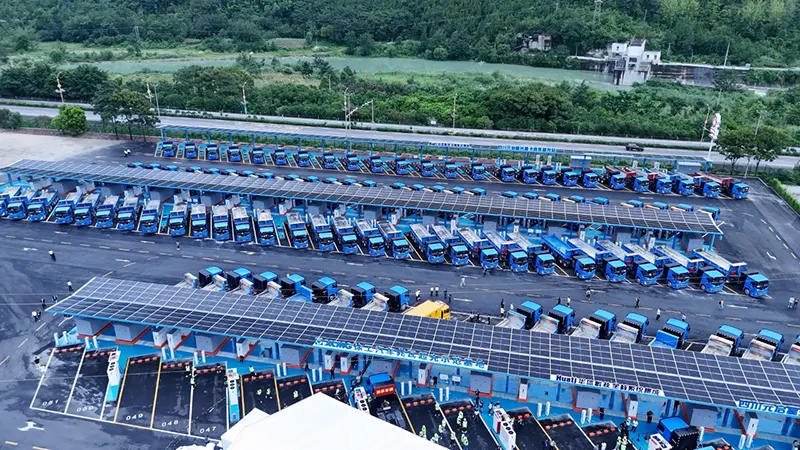
Success Story
The world's first 100 MW-class truck charging station
The Yuanqi Xingguang station in Mianyang, Sichuan, China runs on Huawei Megawatt Charging to serve trucks hauling sand and gravel from nearby mines, with a nearly 1 MW solar carport and energy storage.
- 100 MW
- Design capacity
- 18 × 1.44 MW
- Megawatt charging bays
- 108 × 600 kW
- Liquid-cooled fast-charging bays
- ~700
- Electric trucks per day
Specifications
Specifications
| Power Unit 720-720 | Megawatt Dispenser | |
|---|---|---|
| Cooling | Liquid cooling | |
| Installation | Floor-mounted (ships on its base, pre-filled with coolant) | Floor-mounted |
| Dimensions (L × W × H) | 800 × 1700 × 2150 mm | 900 × 550 × 2000 mm |
| Ingress protection | IP55 | |
| Operating temperature | −35°C to +55°C | |
| Storage temperature | −40°C to +70°C | |
| Relative humidity | 5%RH to 95%RH | |
| Output voltage | 200–1000 Vdc | |
| Output power / current | 720 kW | 1200 A × 2 |
| Peak efficiency | ≥ 96% | — |
| Modules | ACDC × 6, DCDC × 12 | — |
| Communication interface | GE, 4G (dual SIM) | — |
| Connector quantity | — | 2 |
| Cable length | — | 2.5 m |
| Screen | — | 12.1-inch 16:10 touchscreen + physical buttons |
FAQ
Frequently asked questions
Why does a liquid-cooled station cost less to run than an air-cooled one?
- Built to last: 10-year design life and a module failure rate below 0.2%, so fewer replacements and spare parts.
- Maintenance-free: OTA upgrades and remote fault location.
- Lower energy bills: liquid cooling uses little power and conversion efficiency is high.
- Quick to build, easy to expand: modular construction, 70% less site area, and power and dispensers upgrade without rebuilding the station.
How does the station earn more?
- Higher turnover: 15-minute-class charging lifts bay turnover 4×.
- AI PV + ESS + charging: forecasts load and controls storage charge/discharge, cutting demand charges and lifting total station revenue by 15%.
- Every vehicle: one platform serves trucks and passenger cars.
- Fast to open, holds value: modular build opens in 28 days, relocatable, with 65% residual value after 5 years.
How does it keep a 24/7 truck station running?
- Rugged: IP55, fully sealed liquid cooling with anti-condensation, and 280,000 coolant-channel pulse tests passed.
- Extreme temperatures: full output at 50°C for 1,000 hours, and normal charging after 96 hours stored at −40°C.
- Always on: 99% equipment availability avoids losses from station downtime.
Co-invest in a Megawatt Charge station
Register for investment details on a megawatt electric-truck charging station. Our team will contact you to assess your site and investment model.
[1][2] Charger-side capability measured in a specific lab test environment; actual results depend on real-world use.
[3] 15-minute class for SOC 10%–80% on 318–528 kWh batteries rated 3.5C or above; actual charging time varies by vehicle, battery, parameters and temperature.
[4] Measured in a lab; actual charging power may vary by vehicle, battery, software version and environment.
*Product images and videos are for reference only; actual specifications may vary. All data is from Huawei Digital Power.