Products & Services
Home batteries
Register for a quotationIdeal for homes that want free power at night and protection for appliances from voltage dips and outages
Home Battery
Home batteries — every brand we install, compared
A battery stores the power you generate during the day for use at night and backs you up during outages. Every model below uses LFP (lithium iron phosphate) cells, which are safer and longer-lasting than ordinary lithium. All figures are from manufacturer datasheets
LUNA2000-7-S1
Expandable up to 21 kWh in one cabinet
- Power output
- Up to 7 kW (3.5 kW per module)
- Usage cycle
- 8,000 cycles at 90% DoD
- Warranty
- Up to 15 years
Best for: Homes that want to start small and expand, with one brand looking after the whole system
SigenStor BAT 10.0
314Ah cells rated for 10,000 cycles
- Power output
- Charge/discharge 4.6 kW · peak 6.7 kW (10 seconds)
- Usage cycle
- 10,000 cycles
- Warranty
- Per manufacturer terms (ask our team)
Best for: Homes that want the most charge cycles and an EV charger built into the same system
EVO All-in-One 10.24 kWh
Inverter + battery in one unit
- Power output
- Charge/discharge up to 10 kW
- Usage cycle
- 6,000 cycles
- Warranty
- 12 years or until capacity drops to 70%
Best for: Homes with limited installation space that want a quick, all-in-one system
Battery-Box LV5.0+ (paired with Solis)
5.12 kWh modules — add more as budget allows
- Power output
- Continuous 100A · peak 200A (10 seconds)
- Usage cycle
- 6,000 cycles at 100% DoD
- Warranty
- 10 years
Best for: Tight starting budget — start with one module and add more later
Battery-Box Premium LVS 16.0 (paired with Solis)
16 kWh for homes with heavy usage
- Power output
- Depends on the stack and inverter specs
- Usage cycle
- 60% remaining capacity guaranteed at 10 years
- Warranty
- 10 years
Best for: Large homes with heavy night-time use, or whole-home backup
M-ELV 7 kWh
Connects to your existing system — no inverter replacement needed
- Power output
- Output up to 5 kVA · input 3.75 kVA
- Usage cycle
- Per manufacturer terms
- Warranty
- 12 years
Best for: Homes that already have solar and want to add a battery later without tearing out the existing system
Full spec comparison table
| Topics | Huawei LUNA2000-7-S1 | Sigenergy SigenStor BAT 10.0 | FOX ESS EVO All-in-One 10.24 kWh | BYD Battery-Box LV5.0+ (paired with Solis) | BYD Battery-Box Premium LVS 16.0 (paired with Solis) | Atmoce M-ELV 7 kWh |
|---|---|---|---|---|---|---|
| Usable capacity | 6.9 kWh | 8.76 kWh | 9.73 kWh (DoD 95%) | ~5.1 kWh (DoD 100%) | 16 kWh (4 modules × 4 kWh) | Depends on operating mode (ask our team) |
| Nameplate capacity | 7 kWh | 9.04 kWh | 10.24 kWh | 5.12 kWh per module | 16 kWh | 7 kWh |
| Charge / discharge power | Up to 7 kW (3.5 kW per module) | Charge/discharge 4.6 kW · peak 6.7 kW (10 seconds) | Charge/discharge up to 10 kW | Continuous 100A · peak 200A (10 seconds) | Depends on the stack and inverter specs | Output up to 5 kVA · input 3.75 kVA |
| Usage cycle | 8,000 cycles at 90% DoD | 10,000 cycles | 6,000 cycles | 6,000 cycles at 100% DoD | 60% remaining capacity guaranteed at 10 years | Per manufacturer terms |
| Warranty | Up to 15 years | Per manufacturer terms (ask our team) | 12 years or until capacity drops to 70% | 10 years | 10 years | 12 years |
| Cell technology | LFP (LiFePO₄) | LFP (LiFePO₄) 314Ah cells | LFP (LiFePO₄) | LFP (LiFePO₄) BYD cells | LFP (LiFePO₄), 4 kWh per module | LFP (LiFePO₄) 280Ah |
| Water/dust rating | IP66 | IP66 | IP66 | IP20 (indoor installation) | Indoor installation | IP66 |
| Operating temperature | -20°C to 55°C | -20°C to 55°C | Can be installed outdoors | -10°C to 50°C | -10°C to 50°C | Can be installed outdoors |
| Scalability | Expand to 14 / 21 kWh and parallel up to 4 systems | Add modules in the same cabinet; 5-in-1 system with built-in inverter + EV charger | Parallel up to 3 units, over 30 kWh / 30 kW in total | Parallel up to 32 units (163.84 kWh) | Stack 1–6 modules (4–24 kWh), parallel up to 256 kWh | Expandable up to 126 kWh, supports both 1-phase and 3-phase |
| Size / weight | 590 × 255 × 870 mm · 148 kg (including stand) | 767 × 270 × 265 mm · 78.2 kg per module | All in one cabinet — no wiring between devices | 195 × 625 × 285 mm · ~45 kg | Modular, stacked by number of modules | 830 × 480 × 195 mm · 73.5 kg |
| Compatible inverter | Huawei SUN2000 series inverters | SigenStor EC / Sigen Hybrid | Built-in (no separate inverter needed) | Solis S6-EH hybrid 1P/3P | Solis S6-EH hybrid 3P | Connects on the AC side to your existing system (AC-coupled), battery voltage under 30V |
* Usable capacity is the energy you can actually draw, which is always less than the nameplate capacity — compare using this figure, not the nameplate
How to size your battery
- ✓Check your night-time usage (6 PM–6 AM) from your electricity bill or the utility's app
- ✓1 kWh of battery stores about 1 unit — a home using 8 units a night should start at 8–10 kWh
- ✓If you want backup during outages, allow enough output power (kW) for the appliances you'll run at the same time, especially air conditioners and water pumps
- ✓Choose an expandable model if you're unsure about future usage
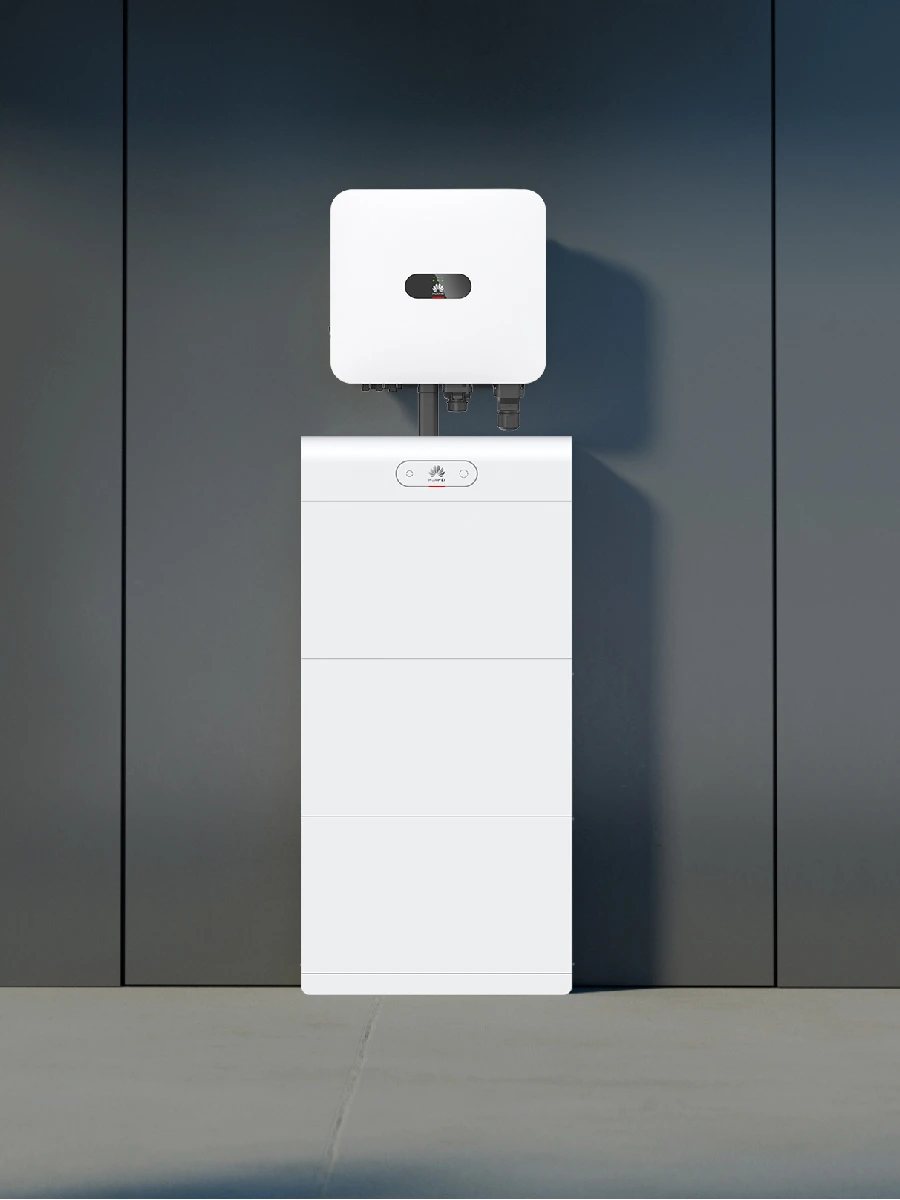
A home battery stores surplus power produced during the day for use at night or when electricity is expensive, so you rely less on the grid and save more than with a standard solar system
During an outage the system switches to battery power automatically, so your home keeps running and appliances and critical equipment are protected from dips and surges
The modular design lets you start with the right capacity and add more later as your usage changes, without replacing the whole system
Service highlights
- ✓Store daytime power for the night and cut peak costs
- ✓Automatic backup during outages
- ✓Protect appliances from voltage dips
- ✓Expand battery capacity later
FAQ
How many hours of backup can a solar battery provide?+
A 5 kWh battery can back up basic loads (lights, fridge, Wi-Fi) for 4–6 hours, or 2–3 hours with one air conditioner running. Batteries of 10 kWh and up can last all night
How long do solar batteries last?+
Lithium Iron Phosphate (LFP) batteries last 6,000–10,000 cycles, or about 10–15 years in normal use, with at least 70% capacity guaranteed over 10 years
How much does a home solar battery cost?+
A 5 kWh battery costs about 80,000–120,000 baht (installed) and a 10 kWh battery 150,000–220,000 baht, depending on brand, technology and the paired inverter
Can I add a battery to an existing solar system?+
Yes. If your existing inverter supports it (a hybrid inverter), a battery can be connected directly; with a string inverter you may need to switch to a hybrid inverter first. We check for free before advising
What's good about the Huawei LUNA2000 battery?+
It uses safe, non-flammable LFP technology, scales modularly, works with Huawei SUN2000 inverters, manages energy automatically with AI and has a 10-year warranty